Thursday, 17 July 2014


Wednesday, 16 July 2014
Imam Ahmed Bin Hambal and the Baker (Wali)
Imam Ahmed, may God be pleased with him, once was traveling and needed to stay somewhere overnight. When he went to the Masjid, the guard (not recognizing Imam Ahmed) denied him entrance. Imam Ahmed tried numerous times, but the guard did not accept his requests. Frustrated, Imam Ahmed resolved to spend the night in the Masjid yard. The guard became furious and dragged him away, despite the old age and frailty of Imam Ahmed.
A baker, whose shop was nearby, watched this scene and took pity on Imam Ahmed. He invited the Imam to stay with him for the night. While there, Imam Ahmed noticed that the baker continually made istighfaar (asking for Allah’s forgiveness) while working, and in the morning, the Imam eagerly asked his host about the latter’s continual seeking of forgiveness. The baker said it had become like second nature, and Imam Ahmed then asked whether the man had experienced any reward from this practice.
The baker answered,
“By Allah! No duaa (supplication to God) I made except that it was answered but one.”
“And what is that duaa?” asked Imam Ahmed.
“To be able to see the famed Imam Ahmed ibn Hanbal!”
Imam Ahmed interjected, “I am Ahmed ibn Hanbal!”
He then went on to add:
“By Allah! I was dragged to your place so that you can have your duaa come true.”
A baker, whose shop was nearby, watched this scene and took pity on Imam Ahmed. He invited the Imam to stay with him for the night. While there, Imam Ahmed noticed that the baker continually made istighfaar (asking for Allah’s forgiveness) while working, and in the morning, the Imam eagerly asked his host about the latter’s continual seeking of forgiveness. The baker said it had become like second nature, and Imam Ahmed then asked whether the man had experienced any reward from this practice.
The baker answered,
“By Allah! No duaa (supplication to God) I made except that it was answered but one.”
“And what is that duaa?” asked Imam Ahmed.
“To be able to see the famed Imam Ahmed ibn Hanbal!”
Imam Ahmed interjected, “I am Ahmed ibn Hanbal!”
He then went on to add:
“By Allah! I was dragged to your place so that you can have your duaa come true.”
Saturday, 26 April 2014
Tuesday, 15 April 2014
On Nature, Beauty, and Transcendence: An Interview with Seyyed Hossein Nasr

Matter and Beyond explores a wide range of ethical, philosophical, spiritual and scientific questions through interviews with leading scholars and scientists on compelling topics such as: mysteries of consciousness, the healing powers of music and sound, love, ecology, astronomy, artificial intelligence, cosmology, quantum mechanics and free will, spiritual capital, bioethics and unity of knowledge.
What follows is an interview with Professor Seyyed Hossein Nasr, one of the world’s leading experts on Islamic science and spirituality. He is professor of Islamic Studies at George Washington University. Professor Nasr is the author of numerous books including Man and Nature: the Spiritual Crisis of Modern Man (Kazi Publications, 1998), Religion and the Order of Nature (Oxford, 1996), and Knowledge and the Sacred (SUNY, 1989).
M&B: You study mathematics, physics, geology, and history of science. In what way does this benefit you?
Bismi’llah al-Rahman al-Rahim . Let me begin with the Name of God. I was gifted when I was a young person in science and mathematics. After I came to America to study I received the highest grades in many national tests in these fields. So everybody thought that I should be a scientist. And I had a great deal of love for science and a wish to understand the real significance of what nature is. Furthermore, I loved mathematics. Consequently I went to MIT, which was the leading scientific institution at that time, and still is today in this field. I was studying physics and mathematics, but concentrating on physics. Soon, however, I realized that in fact modern physics, not only quantum mechanics but going back to Newtonian physics, does not deal with the nature of things. It deals with mathematical structures related to the quantitative aspect of phenomena. You will never come to know the actual nature of things by studying physics. So I lost interest in becoming a physicist. And then I went from there, after studying mathematics and physics at MIT, to study geology and geophysics at Harvard. The reason I did that is that I wanted to know also a descriptive science. Now, during all those years that I was studying the sciences, in parallel I was studying philosophy a great deal. The scientific discipline of my mind served me in a very positive way later on.
First of all, throughout all the criticism I have made of modern science in the last fifty years, nobody has been able to say that this man does not know anything about modern science because I do know something about this science. Secondly, it has of course given me mental discipline and, I hope, some clarity, which I try to reflect in my writings and my lectures.
M&B: For most people those disciplines are separate. What are your comments about that?
I believe that one of the greatest tragedies that has happened in Western civilization after the Middle Ages, and has resulted in what we see today, is compartmentalization, that is, a separation of various modes of knowing, various forms of knowledge, from each other, so that few matters are known in a complete way. Here I am, a professor at a major American university, and the students who come and study with us—their minds are like drawers in your bedroom. You put socks in one drawer, underwear in another, shirts in another… So they go from one class to another, they learn certain things, but there is no connection between various subjects that they learn. It is not only I who say this; the great English philosopher Alfred North Whitehead said this over a half a century ago. This compartmentalization is one of the greatest dangers facing modern civilization. In traditional civilization there used to be a unity of knowledge. Of course, Islamic civilization is based upon tawhid, upon unity, and in the framework of the Islamic sciences all the different disciplines, from poetry to music to philosophy to history to geology to medicine to physics and mathematics, all of these have some kind of interrelation. There has always been an overall world view that has embraced them.
Now, that has been destroyed, but there have been some attempts to try to create a metaphysical basis to reintegrate the sciences. For example, Whitehead was interested in this matter and he tried very hard to do this, but none of these people really succeeded because the whole education system in the West is now based on this kind of specialization and unrelated disciplines that have nothing to do with each other. So what to do? You end up with a scientistic positivist claiming that nothing unscientific is important, that there is no other mode of knowledge but science—that is one side. On the other side for now we see those who emphasize only the outward meaning of religion with little interest in its intellectual and spiritual aspects. And other people fall in between.
What I have tried to do in my life is to resuscitate a vision of the unity of knowledge based on a metaphysical foundation and, more particularly, within the Islamic tradition, where this has been so important.
M&B: Was knowledge compartmentalized like that in the past? Could you give us some examples from history?
No, it was not. Let me mention the field of art which in traditional civilization was related to knowledge, to the science of forms. Now that link has been largely severed as has the link between various branches of knowledge. It is a modern illness that has deprived poetry and art of their intellectual function, that is, their relation to knowledge at the highest level. In the nineteenth century, when a lot of the Romantic poets of the English language such as Wordsworth depicted poetically beautiful scenes of nature and were against the vulgarization, the destruction, the ugly landscapes that resulted from the Industrial Revolution in England, their poetry was taken simply as sensibility, as emotion; it was not allowed to challenge the science of the day, which reigned supreme as the only legitimate form of knowing and in fact continues to do so.
This situation goes back to Galileo and Descartes, who took away from nature all quality and said everything—beauty, other things—are subjective and the object of scientific knowledge is ultimately pure quantity. Modern science still suffers from that myopia, whereas external reality is not pure quantity. Let me give you some examples. Take one of the great Ottoman mosques such as Sultanahmet. Now, when you stand on one side of the square before you get to the mosque, you have trees, and you have cars going by, you have before you a space—a space that you experience. You can describe that space from the point of physics—Cartesian coordinates, measurements, and so on,—but your immediate experience of that space is still there. When you go across the square and into the mosque, you again experience a space but it is a very different space. You have the same situation in the sacred architecture of Persia, in the Arab world, of the Taj Mahal in India, and in other places. The great architects who built these edifices provided for you an experience and a vision and another aspect of the reality which we call space and they did so on the basis of a science which was not divorced from other forms of knowledge. They did not create only a subjective space but one as real as the space across the street that we can measure with Cartesian coordinates and that cars drive through without ever thinking that this is a different space, qualitatively speaking, from the space of the mosque. Both the immediate experience of the space in the street and the sacred space in the mosque prove the poverty of the reduction of space to pure quantity á la Descartes.
It is the same with music. Music takes you out of your ordinary experience of time. So does poetry, but especially music, and it makes you experience time in a different way. Now, that other time that you experience is not simply a fantasy; it is not simply subjectivism; it is another aspect of reality. In all traditional arts there is a science that reveals another dimension of reality without this science being completely divorced from other modes of knowledge. A traditional mosque or cathedral is related to cosmology and theology as well as the science of forms, materials, colors and optics. Such edifices are themselves testimony to the unity of knowledge and the necessity to reject the compartmentalization of various modes of knowing.
M&B: In what ways can we relate human and experiential aspects of knowledge to scientific knowledge?
As you sit here, you have a single center of consciousness. Otherwise, you would be mentally ill and you would be taken to see a psychiatrist. A normal human being, who does not have a mental illness, has one single consciousness although it can partake of levels. In our everyday life we try to relate the different things that we do and think and say to that center determining who we are. So the yearning for unity is within the very nature of the human state.
When we do a lot of irrelevant things, totally separate things, what happens is that gradually we become compartmentalized ourselves; we become scattered. That leads actually to a kind of psychological dislocation and a house divided against itself, as Christ (pbuh) said, shall not stand.
There are many people who, in order to live with themselves, have divided their mind into several parts. With one part they pursue science, with one part they pursue art, with one part they pursue religion, and with one part they pursue this and that other activity. They are not integrated. But the goal of human life on earth is to become integrated. The consequence of this lack of integration, this lack of unity, is to be seen in so many fields today, for example in modern medicine. That is why we are talking just now about holistic medicine as embracing all the different elements of our being—our body, psyche, soul, spirit—that must be taken as interdependent realities whose harmony is necessary in order to have real health.
More and more people are also now speaking of a holistic worldview whose loss has caused the environmental crisis. Ecology by nature is a discipline that brings things together. If we destroy the Potomac River here, we do not know what effect it will have on the fish in Mexico. But it might have an effect of which we are not as yet aware. Now many are beginning to realize more and more that on the earth everything is intertwined and our experiential knowledge cannot be divorced from scientific knowledge and vice versa.
Today even some modern scientists are beginning to realize this truth, but they still exclude the spiritual world and the psychological world from their science. At least on the material, however, level they are realizing that this cutting of things from their natural setting and analyzing them and getting knowledge about them is not the whole of knowledge. There is also crucial knowledge based on the interrelatedness of things. And I think it is here that Islamic thought can make a very important contribution to contemporary thought.
M&B: In what way is acquiring that kind of knowledge about the interrelatedness of nature different from the design argument in theology?
First of all, the design argument may also be found in Islam in another form. We have it in all religions. But putting all the theological aspects aside, if you find a watch on a table, you would think that someone designed it and that the person had the intelligence to design a watch. When you see things much more complicated than the watch, working in a remarkable fashion, it creates in you an awareness of an incredible intelligent design and a sense of awe, of wonder. That is what modern science has for the most part tried to destroy. Einstein, one of the greatest scientists, had this sense of wonder—but ordinary science as it is taught in schools is against encouraging this sense of wonder. Rather, it has tried to equate to explain with to explain anyway, providing a view in which there is no sense of wonder. The enchantment of nature, wonderment, they have been all cast away. Now, all religions emphasize the human soul’s experience of wonder. For example, the Qur’an speaks so much about God’s creation and asks us to think, to meditate upon and to wonder about God’s creation. That is impossible without accepting the remarkable design in God’s creation.
M&B: Do you think that becoming aware of ecological problems is related to realizing human responsibility?
A crisis can always be positive in a way in that it can force us to re-examine our position. When the earth trembles under your feet, you are in a different frame of mind than when you were walking on solid earth and you did not think about the earth. When you are sitting here you do not even think about the floor, but if the floor begins to shake, if there is a big earthquake, you will immediately think about the floor.
Now, the environmental crisis has caused many people to realize that modern science and technology by themselves are not going to solve all the problems of the world. It is true that greed, domination, and power politics have all played a role in this crisis, but they were always around. Such things have been around since time immemorial. What has changed is what modern technology and science have made possible—the destruction of all of human life, the destruction of whole ecosystems. Attila the Hun, Julius Caesar, Darius the Great or other great conquerors had vast armies consisting of hundreds of thousands of men but those armies could not destroy nature in the way one single chemical plant, one single oil spill can do. So a lot of people have become aware that there is something wrong; there is something seriously wrong. And that is the only positive aspect of this crisis because it makes us aware of the threat to human life.
I have written for fifty years on this matter. I am one of the first Muslim thinkers to have written about such subject is and one of the first to predict the environmental crisis and I stand by what I said but this matter half a century ago. Every kind of trying to save the planet by recourse to only good engineering or economic planning is just cosmetic. I just had a discussion, which is coming out in the next issue of the Islamic Science journal, in which I said that if someone has cancer as a result of which his skin turns yellow, if you just put some cosmetics on the face of woman so that her cheeks seem rosy, that is not going to cure her cancer. We need to do something much more profound than this.
M&B: Do you think developing religious and artistic views of nature, as you have described, and finding various ways to gain knowledge to reach God will affect people’s responses to the global environmental crisis?
Ordinary people are drawn by their inner nature to the beauty of God’s creation. In Washington, D.C., in the beginning of April, you have the cherry blossoms. I know you have seen cherry blossoms—one of most beautiful natural manifestations in big cities anywhere in the world. There are hundreds and hundreds of Japanese trees which were presented to the United States at the beginning of the twentieth century and which are found especially around the basin near the Thomas Jefferson Monument and certain other places in Washington. They are very beautiful when in bloom, and people are drawn from all over to their beauty. So, there is still certainly attraction to the beauties of nature. But the problem is that modern education and culture have eclipsed or lessened the awareness of human beings of the relation between this beauty and the Beauty of God. So many people will say, “Oh, what a beautiful tree!” But that does not usually remind them of God because of a secularized culture that has dominated the West for the past few centuries. But the natural inclination toward beauty is always there.
In this context it is interesting to note that many people who are atheists are also environmentalists. They want to preserve nature. They want to preserve the forests and the mountains. That, for them, is “God,” without realizing that they are seeing God’s Theophanies, God’s creation, in these beautiful, natural scenes that are for them “sacred” and “sacrosanct.” In a godless cosmos that dominates over the mindset of so many in the West, however, there is no room for the presence of the sacred in its true sense. Furthermore, there is no way of solving the environmental problem without realizing that nature is sacred in the religious sense of this word. Therefore, you have to first of all revive awareness of the sacred, which I have tried to do in several of my writings.
It is important also to realize that the sacred is not only a category pertaining to the Torah, the Gospels or the Qur’an, a church or a mosque. Of course, they are the heart of the sacred for the followers of these various religions, but the sacred also exists in God’s creation, in planets and animals, in the mountains, deserts and seas, in the firmament and the stars. It is crucial to treat nature as something sacred if the present environmental crisis is to be overcome. Unless we do not do that, nothing else is really going to work.
M&B: That seems to be a common point between all the religions. May be something around which people can come together?
I wrote a book called Religion and the Order of Nature that was translated into Turkish two years ago. It is one of my major books, one in which I speak precisely about how all the religions of the world, despite all their different languages and forms, have a remarkably similar view towards the order of nature, where the order of nature comes from, why this order, and how important it is in this domain for the religions of the world to work together. That is perhaps the best hope that we have because in most places in the world people still listen to their religious leaders, whether they be imams, priests or rabbis. If on Fridays the imams in mosques would concentrate on the importance of treating nature as God’s sacred creation, within a few months such teachings would affect what the people do.
A few people will say, “We do not care,” but the vast majority of ordinary people would listen, and so I think that all the religions of the world have a responsibility and all the religions of the world can work together very closely in this vital matter. Furthermore, members of the Abrahamic family have to realize that the love for nature is not pantheism. It is not the negation of the transcendence of God.
Let me end with this famous poem from Rumi. It says, “If only the world of existents had tongues, so with those tongues they could unveil the mystery of existence.” I have always said, echoing Rumi and our other sages, that everything is alive, everything bears within itself a divine mystery, but it does not have a tongue to speak to us in such a manner that we can hear its call. We have to learn its language expressed through what appears to us as and from the ordinary human point of view as eloquent silence.
Interview conducted by Mustafa Tabanli for Ebru TV for the television show Matter and Beyond, episode 23. Visit www.ebru.tv for the full show
http://www.fountainmagazine.com/article.php?ARTICLEID=1022
Improving the Memory
Improving your memory is easier than it sounds. Most of think of our memory as something static and unchanging. But it’s not — you can improve your memory just as you can improve your math or foreign language skills, simply by practicing a few tried and true memory building exercises.
There are two kinds of memory — short-term and long-term. Short-term memory is the kind of memory our brain uses to store small pieces of information needed right away, like someone’s name when you meet for the first time. Research has demonstrated that short-term memory’s capacity is about seven pieces of information. After that, something has to go.
Long-term memory is for things you don’t need to remember this instant. When you study for a test or exam, that’s long-term memory at work. A memorably moment in your life, events with family or friends, and other similar kinds of situations also get stored in long-term memory.
So how do you go about improving your memory?
Your Memory is in Your Brain
Although it may seem obvious, memory is formed within your brain. So anything that generally improves your brain health may also have a positive impact on your memory. Physical exercise and engaging in novel brain-stimulating activities — such as the crossword puzzle or Sudoku — are two proven methods for helping keep your brain healthy.
Remember, a healthy body is a healthy brain. Eating right and keeping stress at bay helps not only your mind focus on new information, but also is good for your body too. Getting a good night’s sleep every night is important as well. Vitamin supplements and herbal extracts aren’t the same thing as getting vitamins and omega-3 fatty acids naturally, through the food you eat.
Improve Your Memory
So you want to improve your memory? You need to focus on what you’re doing and the information you’re looking to encode more strongly in your brain. These tips will help you do just that:
1.Focus on it. So many people get caught up in multi-tasking, that we often fail to do the one thing that will almost always improve your memory — paying attention to the task at hand. This is important, because your brain needs time to encode the information properly. If it never makes it into your memory, you won’t be able to recall it later. If you need to memorize something, quit multitasking.
2.Smell, touch, taste, hear and see it. The more senses you involve when you need to encode memory, usually the more strong a memory it becomes. That’s why the smell of mom’s home-baked cookies can still be recalled as fresh as though she were downstairs making them just now. Need to remember someone’s name you met for the first time? It may help to look them in the eye when you repeat their name, and offer a handshake. By doing so, you’ve engaged 4 out of your 5 senses.
3.Repeat it. One reason people who want to memorize something repeat it over and over again is because repetition (what psychologists sometimes refer to as “over learning”) seems to work for most people. It helps not to cram, though. Instead, repeat the information spaced out over a longer period of time.
4.Chunk it. Americans remember their long 10-digit telephone numbers despite being able to hold only 7 pieces of information in their brain at one time. They do because we’ve taught ourselves to chunk the information. Instead of seeing 10 separate pieces of information, we see 3 pieces of information — a 3 digit area code, a 3 digit prefix, and a 4 digit number. Because we’ve been taught since birth to “chunk” the telephone number in this way, most people don’t have a problem remembering a telephone number. This technique works for virtually any piece of information. Divide the large amount of information into smaller chunks, and then focus on memorizing those chunks as individual pieces.
5.Organize it. Our brains like organization of information. That’s why books have chapters, and outlines are recommended as a studying method in school. By carefully organizing what it is you have to memorize, you’re helping your brain better encode the information in the first place.
6.Use mnemonic devices. There are a lot of these, but they all share one thing in common — they help us remember more complicated pieces of information through imagery, acronyms, rhyme or song. For instance, in medical school, students will often turn memorization of the bones in the body or symptoms of specific illnesses into sentences, where the first letter of each word corresponds with a specific bone or symptom. Learn about more mnemonic devices and memory here.
7.Learn it the way that works for you. People often get caught up in thinking there’s a “one size fits all” learning style for memorizing new material. That’s simply not the case — different people prefer different methods for taking in new information. Use the style that works for you, even if it’s not the way most people study or try and learn new information. For instance, some people like to write things down when they’re learning something new. Others may benefit more from recording what they’re hearing, and going back to take more detailed notes later on at their own leisure.
8.Connect the dots. When we learn, we often forget to try and make associations until later on. However, research has shown that memory can be stronger when you try and make the associations when you first take in the information. For instance, think about how two things are related, and the memory for both will be enhanced. Connect new information to existing information or experiences in your mind.
As we age, our memory sometimes seems to get worse. But it doesn’t have to. By following these eight tips, you can keep your memory sharp at any age, and improve it any time.
By John M Grohol PsyD
There are two kinds of memory — short-term and long-term. Short-term memory is the kind of memory our brain uses to store small pieces of information needed right away, like someone’s name when you meet for the first time. Research has demonstrated that short-term memory’s capacity is about seven pieces of information. After that, something has to go.
Long-term memory is for things you don’t need to remember this instant. When you study for a test or exam, that’s long-term memory at work. A memorably moment in your life, events with family or friends, and other similar kinds of situations also get stored in long-term memory.
So how do you go about improving your memory?
Your Memory is in Your Brain
Although it may seem obvious, memory is formed within your brain. So anything that generally improves your brain health may also have a positive impact on your memory. Physical exercise and engaging in novel brain-stimulating activities — such as the crossword puzzle or Sudoku — are two proven methods for helping keep your brain healthy.
Remember, a healthy body is a healthy brain. Eating right and keeping stress at bay helps not only your mind focus on new information, but also is good for your body too. Getting a good night’s sleep every night is important as well. Vitamin supplements and herbal extracts aren’t the same thing as getting vitamins and omega-3 fatty acids naturally, through the food you eat.
Improve Your Memory
So you want to improve your memory? You need to focus on what you’re doing and the information you’re looking to encode more strongly in your brain. These tips will help you do just that:
1.Focus on it. So many people get caught up in multi-tasking, that we often fail to do the one thing that will almost always improve your memory — paying attention to the task at hand. This is important, because your brain needs time to encode the information properly. If it never makes it into your memory, you won’t be able to recall it later. If you need to memorize something, quit multitasking.
2.Smell, touch, taste, hear and see it. The more senses you involve when you need to encode memory, usually the more strong a memory it becomes. That’s why the smell of mom’s home-baked cookies can still be recalled as fresh as though she were downstairs making them just now. Need to remember someone’s name you met for the first time? It may help to look them in the eye when you repeat their name, and offer a handshake. By doing so, you’ve engaged 4 out of your 5 senses.
3.Repeat it. One reason people who want to memorize something repeat it over and over again is because repetition (what psychologists sometimes refer to as “over learning”) seems to work for most people. It helps not to cram, though. Instead, repeat the information spaced out over a longer period of time.
4.Chunk it. Americans remember their long 10-digit telephone numbers despite being able to hold only 7 pieces of information in their brain at one time. They do because we’ve taught ourselves to chunk the information. Instead of seeing 10 separate pieces of information, we see 3 pieces of information — a 3 digit area code, a 3 digit prefix, and a 4 digit number. Because we’ve been taught since birth to “chunk” the telephone number in this way, most people don’t have a problem remembering a telephone number. This technique works for virtually any piece of information. Divide the large amount of information into smaller chunks, and then focus on memorizing those chunks as individual pieces.
5.Organize it. Our brains like organization of information. That’s why books have chapters, and outlines are recommended as a studying method in school. By carefully organizing what it is you have to memorize, you’re helping your brain better encode the information in the first place.
6.Use mnemonic devices. There are a lot of these, but they all share one thing in common — they help us remember more complicated pieces of information through imagery, acronyms, rhyme or song. For instance, in medical school, students will often turn memorization of the bones in the body or symptoms of specific illnesses into sentences, where the first letter of each word corresponds with a specific bone or symptom. Learn about more mnemonic devices and memory here.
7.Learn it the way that works for you. People often get caught up in thinking there’s a “one size fits all” learning style for memorizing new material. That’s simply not the case — different people prefer different methods for taking in new information. Use the style that works for you, even if it’s not the way most people study or try and learn new information. For instance, some people like to write things down when they’re learning something new. Others may benefit more from recording what they’re hearing, and going back to take more detailed notes later on at their own leisure.
8.Connect the dots. When we learn, we often forget to try and make associations until later on. However, research has shown that memory can be stronger when you try and make the associations when you first take in the information. For instance, think about how two things are related, and the memory for both will be enhanced. Connect new information to existing information or experiences in your mind.
As we age, our memory sometimes seems to get worse. But it doesn’t have to. By following these eight tips, you can keep your memory sharp at any age, and improve it any time.
By John M Grohol PsyD
5 Simple Ways to Increase Your Intelligence
Your brain needs exercise just like a muscle. If you use it often and in the right ways, you will become a more skilled thinker and increase your ability to focus. But if you never use your brain, or abuse it with harmful chemicals, your ability to think and learn will deteriorate.
Here are 5 simple ways anyone can squeeze a bit more productivity out of the old gray matter.
1. Minimize Television Watching – This is a hard sell. People love vegetating in front of the television, myself included more often than I’d like. The problem is watching television doesn’t use your mental capacity OR allow it to recharge. It’s like having the energy sapped out of a muscle without the health benefits of exercise.
Don’t you feel drained after a couple hours of TV? Your eyes are sore and tired from being focused on the light box for so long. You don’t even have the energy to read a book.
When you feel like relaxing, try reading a book instead. If you’re too tired, listen to some music. When you’re with your friends or family, leave the tube off and have a conversation. All of these things use your mind more than television and allow you to relax.
2. Exercise – I used to think that I’d learn more by not exercising and using the time to read a book instead. But I realized that time spent exercising always leads to greater learning because it improves productivity during the time afterwards. Using your body clears your head and creates a wave of energy. Afterwards, you feel invigorated and can concentrate more easily.
3. Read Challenging Books – Many people like to read popular suspense fiction, but generally these books aren’t mentally stimulating. If you want to improve your thinking and writing ability you should read books that make you focus. Reading a classic novel can change your view of the world and will make you think in more precise, elegant English. Don’t be afraid to look up a word if you don’t know it, and don’t be afraid of dense passages. Take your time, re-read when necessary, and you’ll soon grow accustomed to the author’s style.
Once you get used to reading challenging books, I think you’ll find that you aren’t tempted to go back to page-turners. The challenge of learning new ideas is far more exciting than any tacky suspense-thriller.
4. Early to Bed, Early to Rise – Nothing makes it harder to concentrate than sleep deprivation. You’ll be most rejuvenated if you go to bed early and don’t sleep more than 8 hours. If you stay up late and compensate by sleeping late, you’ll wake up lethargic and have trouble focusing. In my experience the early morning hours are the most tranquil and productive. Waking up early gives you more productive hours and maximizes your mental acuity all day.
If you have the opportunity, take 10-20 minute naps when you are hit with a wave of drowsiness. Anything longer will make you lethargic, but a short nap will refresh you.
5. Take Time to Reflect – Often our lives get so hectic that we become overwhelmed without even realizing it. It becomes difficult to concentrate because nagging thoughts keep interrupting. Spending some time alone in reflection gives you a chance organize your thoughts and prioritize your responsibilities. Afterwards, you’ll have a better understanding of what’s important and what isn’t. The unimportant stuff won’t bother you anymore and your mind will feel less encumbered.
I’m not saying you need to sit on the floor cross-legged and chant ‘ommm’. Anything that allows a bit of prolonged solitude will do. One of my personal favorites is taking a solitary walk. Someone famous said, “All the best ideas occur while walking.” I think he was on to something. Experiment to find the activity that works best for you.
Conclusion – I hope you aren’t disappointed that none of the techniques I’ve proposed are revolutionary. But simple, unexciting answers are often the most valid. The challenge is having the will to adhere to them. If you succeed in following these 5 tips, you’ll be rewarded with increased mental acuity and retention of knowledge.
Thursday, 3 April 2014
Palindromes in the Quran
Palindrome #1:
وَ كُ لٌّ فِ ي فَ لَ كٍ يَ سْبَحُونَ
And all in floating they (are) orbiting.
وَ كُ لٌّ فِ ي فَ لَ كٍ يَ سْبَحُونَ
And all in floating they (are) orbiting.
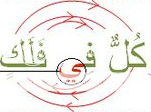
In this ayah Allah is speaking about how the sun and the moon are in orbit. Look at the letters in red, blue and green; they are all floating around the letter in orange. The next word begins with the letter ya [YaSbah], which is referring to Floating.
The letters are Floating around one another, since the concept being discussed is Orbit.
It is also a Palindrome, by which the words can be read forwards and backwards the same phrase is said.
Quranic Palindrome #2:
ورب ك ف ك ب ر
[wa RaBaKa Fa KaBiR]
And your Lord (Allah) magnify!
[i.e. so magnify your Lord!]
[i.e. so magnify your Lord!]
(focus on the Consonants only in the arabic language)
[Quran Surah Mudatthir 74:3]
[Quran Surah Mudatthir 74:3]
This can also be Read the same forwards AND backwards.
Some points to add to this:
1) It was spoken and the one who spoke it was illiterate. It’s pretty hard to come up with a palindrome when you sit down and work it out, yet it might be possible, but to speak it out of the blue -> you only get one shot at getting it right because what is being is said is memorized instantly and written down. You can’t go back and modify it. Plus the speaker himself, the Messenger of Allah, Muhammad, is illiterate so it’s not like he could have sat down before hand and worked through it.
2) It was recited together with the verses before and after it. I.e. it’s right in the middle of a passage and the fact that the verse being a palindrome fits so well in the context of what’s being said and doesn’t take anything away from the coherency and meaning.
3) It was unknown at the time but discovered centuries later by linguistic scholarswho spent their time looking through the Qur’an for such aspects of linguistic excellence. It’s not like the Messenger of Allah, Muhammad (peace be upon him) went around and said look, this verse has a palindrome. It’s just there.
http://qurangems.com/2012/08/24/palindromes-in-the-quran-a-word-or-phrase-that-reads-the-same-backward-as-forward/
Subscribe to:
Posts (Atom)